


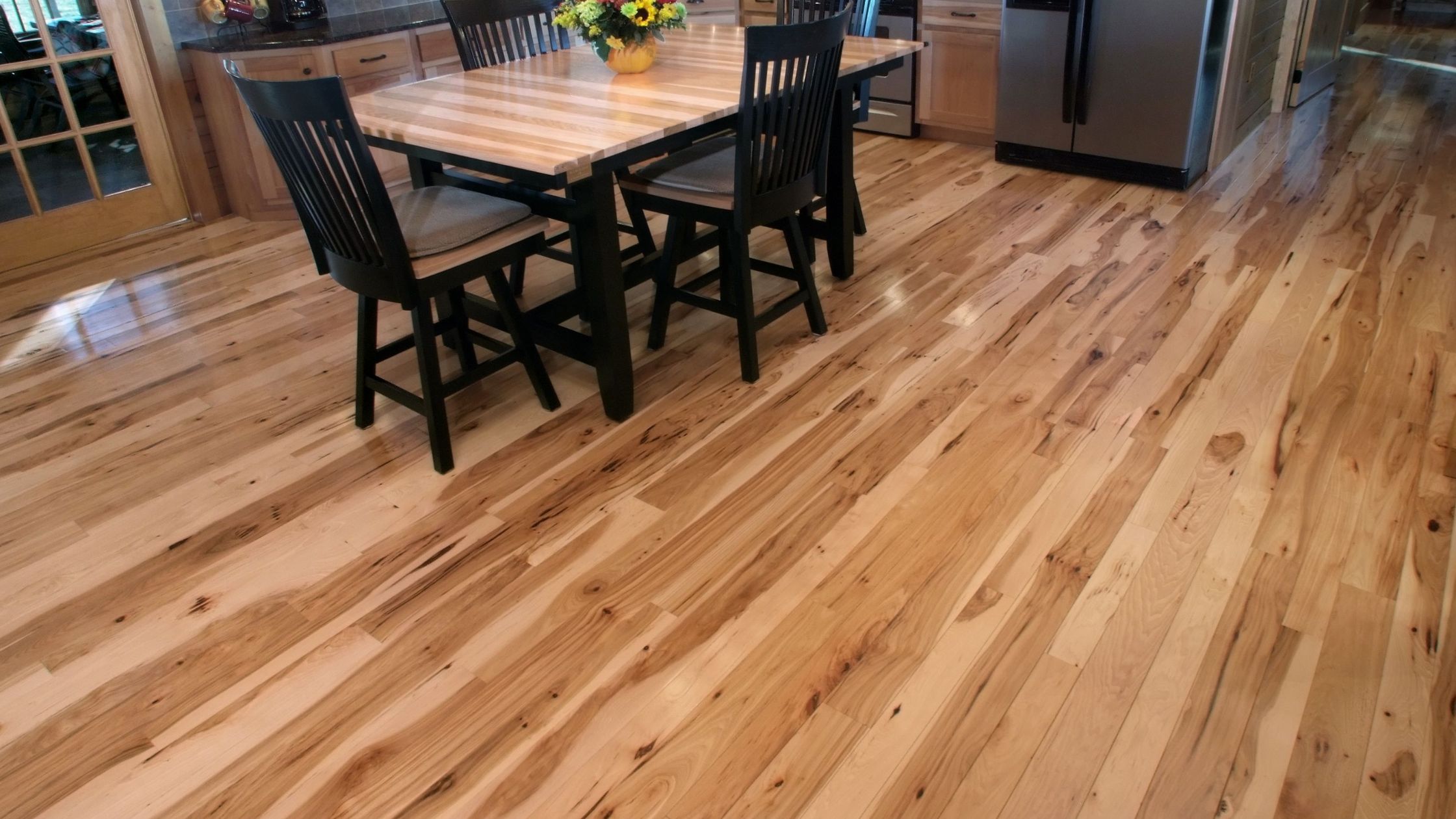
Yes, hardwood can be installed over a concrete slab when the slab is dry enough, flat enough, properly prepared, and compatible with the selected flooring system. For homeowners considering Hardwood Flooring, engineered hardwood is often more practical over concrete because its layered construction provides better dimensional stability than traditional solid hardwood.
The correct installation depends on the slab, grade level, product specifications, moisture conditions, and approved installation method. Hardwood should never be placed over concrete simply because the slab looks dry.
Can Hardwood Flooring in Greenville Be Installed Directly Over Concrete?
Some hardwood flooring in Greenville can be installed over properly prepared concrete, particularly engineered products approved by their manufacturer for slab installations.
The project usually requires evaluation of:
Concrete moisture
Slab flatness
Cracks or surface damage
Grade level
Flooring construction
Installation method
The flooring manufacturer's requirements ultimately determine whether a particular product can be glued, floated, or installed using another approved system.
Why Is Engineered Hardwood Often Better Over Concrete?
Engineered hardwood uses multiple layers arranged to provide greater dimensional stability than a single solid piece of wood.
That makes it better suited to environments where moisture and temperature changes could cause traditional solid wood to expand or contract significantly.
Engineered hardwood can also support installation methods commonly used with concrete, including certain:
Glue-down systems
Floating systems
Manufacturer-approved moisture-control assemblies
Not every engineered product supports every method, so product instructions still matter.
Can Solid Hardwood Be Installed Over a Concrete Slab?
It can be possible in certain properly designed systems, but solid hardwood is generally more restrictive over concrete than engineered hardwood.
Solid flooring traditionally relies on a wood subfloor for nail-down installation. Installing it over concrete can therefore require additional subfloor construction and moisture protection rather than simply fastening boards directly to the slab.
The site's hardwood guidance also states that solid hardwood should not be installed below grade.
This makes engineered flooring particularly important when a wood look is desired in a location where solid hardwood is unsuitable.
Why Must Concrete Be Moisture Tested?
Concrete can contain and release moisture even when its surface feels dry.
If excessive moisture reaches wood flooring, potential problems include:
Cupping
Swelling
Adhesive failure
Board movement
Mold or odor within unsuitable assemblies
Long-term flooring damage
This is why hardwood flooring over concrete should begin with moisture evaluation rather than visual inspection alone.
The flooring and installation system should be matched to the actual slab conditions.
Does a Concrete Slab Need to Be Flat?
Yes. Flatness affects how well hardwood performs after installation.
Low spots, high areas, or abrupt irregularities can create:
Hollow areas
Movement underfoot
Poor adhesive transfer
Stress on locking joints
Uneven finished surfaces
Underlayment should not be expected to correct a seriously uneven slab.
The concrete should be prepared according to the flooring manufacturer's required tolerance before installation begins.
Does New Concrete Need Time to Dry?
Yes. Newly placed concrete contains substantial construction moisture and should not receive moisture-sensitive flooring before it reaches suitable conditions.
The required timeline cannot be determined by age alone. A slab that is several months old can still contain excessive moisture depending on thickness, environment, curing conditions, and construction.
Testing is more reliable than assuming that enough time has passed.
What Is a Moisture Barrier Under Hardwood Flooring?
A moisture barrier or vapor-control system helps reduce moisture movement from the concrete into the flooring assembly.
Depending on the installation, moisture protection may involve:
An approved vapor-retarder membrane
Underlayment with an integrated moisture barrier
A liquid moisture-control system
Moisture-rated adhesive
The correct system depends on the flooring product and installation method.
Adding random plastic or underlayment without checking product requirements can create a different set of problems.
Can Engineered Hardwood Be Glued to Concrete?
Yes, many engineered hardwood products are designed for direct glue-down installation over properly prepared concrete.
A successful glue-down installation requires:
Acceptable slab moisture
A clean surface
Proper flatness
Compatible adhesive
Correct adhesive coverage
Suitable flooring
Some adhesives also provide moisture-control properties, but their limits and installation requirements must be followed carefully.
Can Engineered Hardwood Float Over Concrete?
Yes, if the flooring product is designed for floating installation.
In a floating system, the boards connect to each other rather than being permanently attached across the entire slab. An approved underlayment and moisture-control layer may be placed beneath them.
Expansion space is also important because the connected floor needs room to move as environmental conditions change.
Can Existing Flooring Stay Under Hardwood on a Concrete Slab?
Sometimes, the existing material must be evaluated.
Questions include:
Is it securely bonded?
Is the surface flat?
Is moisture controlled?
Is the new flooring approved over that material?
Will the added height create transition problems?
Removing existing flooring may sometimes provide better access to the actual slab and make moisture or flatness problems easier to identify.
Why Does Acclimation Still Matter Over Concrete?
Hardwood should be installed under appropriate environmental conditions so its moisture content is compatible with the home and installation requirements.
The site specifically emphasizes acclimation before hardwood installation to reduce risks such as warping, cracking, and splitting.
However, acclimation cannot correct a wet concrete slab. The flooring and subfloor both need to be suitable before installation proceeds.
What Should Be Checked Before Hardwood Is Installed on a Slab?
A professional assessment should consider both the floor covering and the concrete beneath it.
Key checks include:
Confirm the slab condition.
Test moisture.
Check flatness.
Identify cracks or damaged areas.
Confirm grade level.
Select a compatible hardwood product.
Choose the approved installation method.
Use the required moisture-control system.
Skipping the preparation stage can compromise even a high-quality flooring product.
Is Wood Flooring Over Concrete in Greenville Suitable for Every Room?
Not automatically.
Room conditions matter. Areas with persistent moisture risk, uncontrolled humidity, active leaks, or below-grade limitations may require a different product or construction approach.
Wood flooring over concrete in Greenville should therefore be selected according to the actual space rather than assuming one hardwood product can be installed everywhere in the home.
FAQs About Hardwood Over Concrete
Can radiant floor heating be used under hardwood on concrete?
Some engineered hardwood products are approved for radiant heat, but temperature limits, installation methods, and manufacturer compatibility need to be confirmed.
Do cracks in concrete have to be repaired before hardwood installation?
Significant cracks should be evaluated before installation because movement or unevenness in the slab can affect the flooring system above it.
Can hardwood be installed over painted concrete?
Possibly, but coatings or paint may interfere with adhesives and moisture systems. The surface needs to meet the requirements of the chosen installation method.
Does a basement concrete floor support solid hardwood?
The site's hardwood guidance states that solid hardwood should not be installed below grade. Engineered flooring is generally the more appropriate real-wood option for these conditions when approved.
Will hardwood over concrete feel colder?
It can, depending on the installation system, slab temperature, underlayment, and room conditions. Some floating systems include underlayment that changes the feel underfoot.
Concrete Does Not Automatically Rule Out Hardwood
Hardwood can work over concrete when the correct product and installation system are selected and the slab is properly tested and prepared. Engineered hardwood is often the more flexible choice because of its dimensional stability and installation options.
For homeowners considering hardwood flooring in Greenville, FLOORS offers hardwood choices and professional installation support to help match the material to the conditions of the home. To discuss a concrete-slab installation, contact us and have the project evaluated before selecting the final flooring system.


